Exception
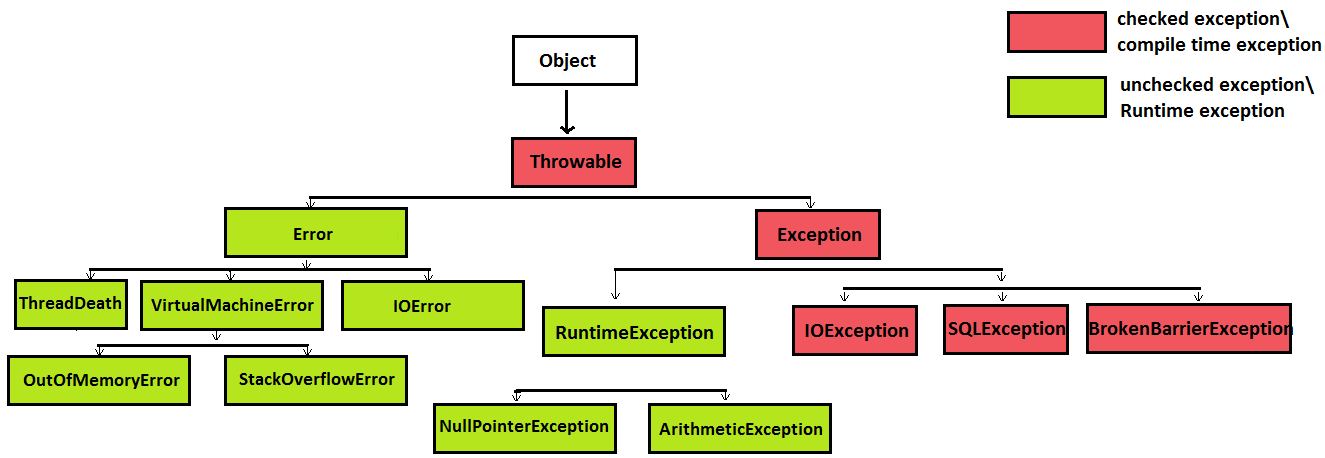
An exception is an event that occurs during the execution of a program that caused the application or program to terminate inappropriately
We can handle the exception using
- try
- catch
- finally
- throw
- throws
Type of exception
there are mainly two type of exceptions that are checked and unchecked however there are some error which also consider as uncheck exceptions
- check
- unchecked
- error
check exception
as also known as compile time exception, which means these exception we must handle at compile time ex: IOException, SQLException
Unchecked exception
as know runtime exception, which means these exception are dangerous and if we have not handled it may cause your application to terminate inappropriately ex: NullPointerException, ArrayIndexOutOfBoundException unchecked exception are not checked at compile time, but they are checked at runtime
public class Demo1 {
    public static void main(String[] args) {
        int a = 40;
        int b = 0;
        int c = a / b;
        System.out.println(c);
    }
}
//result: Exception in thread "main" java.lang.ArithmeticException: / by zero
	//at ExceptionHandl.Exceptions1.main(Exceptions1.java:8)
THE FIX
public class Demo2 {
    public static void main(String[] args) {
        int a = 20;
        int b = 0;
        int c = 0;

        try{
            c = a / b;
        }
        catch (ArithmeticException ex){
            System.out.println("invalid number");
        }
        catch (Exception ex){
            System.out.println("exception occur");
        }
        System.out.println(c);


    }
}
#Errors Errors are irrecoverable eg: OutOfMemoryError, VirtualMachineError
try
any code or statement which we feel is risky or can cause an exception we will write inside the try block
Catch
Whenever any exception happens, it will get the control and you can add any alternative or error handling code in the catch block
finally
no matter exception happen or not it will give you a guarantee to execute the code when you want to execute any piece code, even exception ot not we can write inside the finally block
Examples
```java
public class Demo4 {
public static void main(String[] args) {
    // Case 1: exception not occur
    try {
        int c = 10 / 5;
    } catch (Exception ex) {
        System.out.println(ex.getMessage());
    } finally {
        System.out.println("Case 1: finally called");
    }

    // Case 2: exception occurs but not handled //        try{ //            int c = 10 / 0; //        }finally { //            System.out.println("Case 2: finally called"); //        }

    // Case 3: exception occur and handled
    try {
        int c = 10 / 0;
    } catch (Exception exc) {
        System.out.println(exc.getMessage());
    } finally {
        System.out.println("Case 3: finally called");
    }
} }
```
example: open the connection and we want to make sure the connection get closed so we can write connection closing code inside the finally block
class Authentication {
    public void login(String email, String password) {
        if (email.equals("admin") && password.equals("123")) {
            System.out.println("login successfull");
        } else {
            System.out.println("login failed, try again");
        }
    }
}

public class Demo6 {
    public static void main(String[] args) {
        Authentication auth = new Authentication();
        auth.login("admin", "123");

        auth.login("admin", "123");
    }
}
throw
it is a keyword that is used to throw an exception explicitly we can use throw keyword to either throw checked or unchecked exception in java
Demo - finally
Case 1: exception doesn’t occur Case 2: exception occurs and not handled Case 3: exception occurs and handled
Examples:
class InSufficientFundException extends Exception{ //custom Exception
    public InSufficientFundException(){
        System.out.println("Insufficient amount requested");
    }

    public InSufficientFundException(String message){
        System.out.println(message);
    }
}

class BankAccount{
    private int _balance = 0;
    private int _accountNumber;

    public BankAccount(int _accountNumber){
        _accountNumber = _accountNumber;
    }

    public void deposit(int amount){
        _balance += amount;
        System.out.println("amount credited: "+ amount);
    }

    public void withdraw(int amount) throws InSufficientFundException {
        if(amount <= _balance){
            _balance -= amount;
            System.out.println("amount debited: "+ amount);
        }else{
            throw new InSufficientFundException();
        }
    }

    public int getBalance(){
        return _balance;
    }

    public int getAccountNumber(){
        return _accountNumber;
    }
}


public class Demo5 {
    public static void main(String[] args) {
        BankAccount account = new BankAccount(123456);
        System.out.println(account.getBalance());
        account.deposit(5000);
        try {
            account.withdraw(2000);
        } catch (InSufficientFundException e) {
            System.out.println(e.getMessage());
        }
        account.deposit(1000);
        try {
            account.withdraw(10000);
        } catch (InSufficientFundException e) {
            System.out.println(e.getMessage());
        }
    }
}
Examples of user already logged in exception demo6
Demo6
class Authentication {
    public void login(String email, String password) {
        if (email.equals("admin") && password.equals("123")) {
            System.out.println("login successfull");
        } else {
            System.out.println("login failed, try again");
        }
    }
}

public class Demo6 {
    public static void main(String[] args) {
        Authentication auth = new Authentication();
        auth.login("admin", "123");

        auth.login("admin", "123");
    }
}
Demo7 throwing multiple exceptions.
import java.io.IOException;

class Calculator{
    public void test() throws ArithmeticException, NumberFormatException, IOException {

    }
}

public class Demo7 {
    public static void main(String[] args) {
        Calculator calculator = new Calculator();
        try {
            calculator.test();
        }
        catch (NumberFormatException ex){

        }
        catch (ArithmeticException ex){

        }
        catch (IOException e) {
            throw new RuntimeException(e);
        }
    }
Demo8 different methods if chained and the original throws exception they all must throw
public class Demo8 {
    public static void main(String[] args) {
        try {
            doSomething();
        } catch (Exception e) {
            throw new RuntimeException(e);
        }
    }

    public static void doSomething() throws Exception {//3
        doSomethingElse();
    }

    public static void doSomethingElse() throws Exception {//2
        doSomethingSomethingElse();
    //since the doSomethingSomethingElse() throws Exception doSomething has to throw as well. the sam applies to the other two
    }

    public static void doSomethingSomethingElse() throws Exception { //1
        throw new Exception();
    }
}
Demo 9
/**
 * ArrayIndexOutOfBoundException
 *
 * Throwable -> Exception -> RinTimeException -> IndexOutOfBound -> ArrayIndexOutOfBoundException
 * */

public class Demo9 {
    public static void main(String[] args) {
        int[] a = new int[3];
        a[0] = 10;
        a[1] = 20;
        a[2] = 30;

        try{
            System.out.println(a[10]);
        }catch (ArrayIndexOutOfBoundsException ex){
            System.out.println(ex.getMessage());
        }

    }
}
Demo10 Null pointer
/**
 * NullPointerException
 *
 * Throwable -> Exception -> RuntimeException -> NullPointerException
 *
 * */

class Customer{
    public void display(){
        System.out.println("displaying...");
    }
}

public class Demo10 {
    public static void main(String[] args) {
        String str = "Mark";
        System.out.println(str.length());

        String str2 = null;
        try{
            System.out.println(str2.length());
        }catch (NullPointerException ex){
            System.out.println(ex.getMessage());
        }

        Customer cust1 = new Customer();
        cust1.display();

        Customer cust2 = null;
        try{
            cust2.display();
        }catch (NullPointerException ex){
            System.out.println(ex.getMessage());
        }

    }
}
Demo 11 stack overflow